
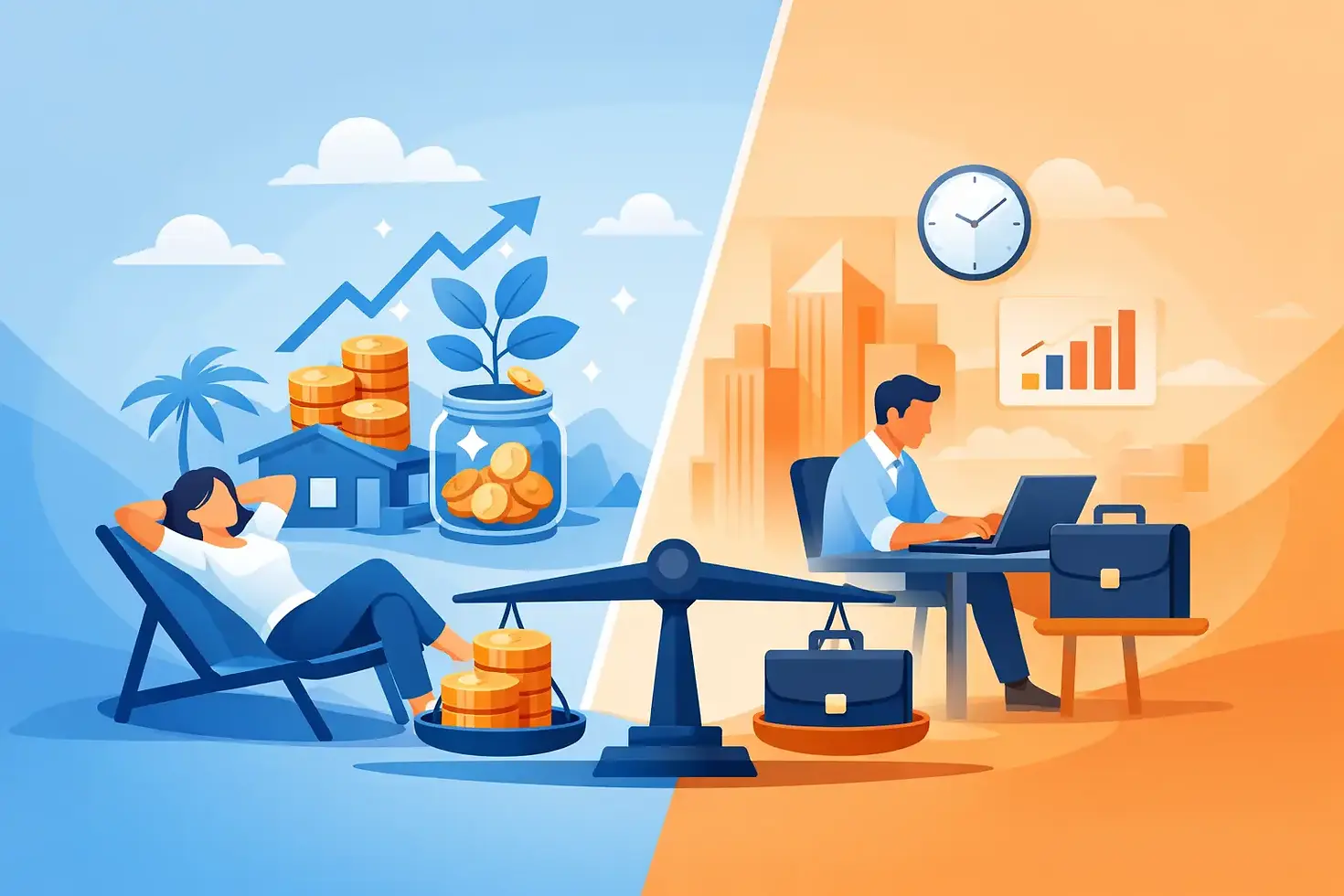
Residual Income vs Active Income Explained
If you are trying to create more money without giving up your current job, understanding residual income vs active income is not optional. It is one of the first mindset shifts that separates people who stay stuck earning only from their hours and people who start building income that can keep paying beyond one task, one day, or one sale.
A lot of people begin with active income because that is what they know. You work a shift, deliver a service, complete a job, and get paid. There is nothing wrong with that. In fact, active income is often the engine that helps you start. But if every pound depends on your direct effort in that exact moment, your growth will always have a ceiling.
Residual income changes the conversation. It does not mean money for nothing. It means you do the work once, or build something that continues producing value, and you can keep being paid from that foundation over time. That is why people looking for flexibility, more control, and a serious home-based business should pay close attention to how these two income types work together.
What residual income vs active income really means
Active income is straightforward. You trade time, skill, labour, or attention for pay. A salary, hourly wage, freelance project fee, and one-off commission all sit in this category. When the work stops, the income usually stops as well.
Residual income works differently. It is income that continues after the initial effort has been made, as long as the system, customer base, asset, or business structure keeps producing value. That might come from repeat customer orders, ongoing commissions, royalties, subscriptions, or a team-based sales structure where you are paid on volume created beyond your personal hand-to-hand effort.
This is where many people get confused. Residual does not mean instant. It also does not mean guaranteed. It normally takes longer to build, but it has more room to grow because it is not locked to one hour of your life at a time.
Why active income feels safer at first
Active income gives fast feedback. You work, you get paid, and that predictability matters, especially when bills are due. For most adults starting a side business, active income is the sensible starting point because it creates immediate cash flow.
That matters in a home-based business. If you sell products directly to customers, the retail profit is active income. You made the sale, served the customer, and earned from that activity. There is value in that. It teaches confidence, communication, consistency, and customer care. It also proves whether you can follow a process and work with discipline.
The challenge is that active income alone can wear you out. If every month starts at zero, you are constantly chasing the next result. That creates pressure. It can also limit your freedom, because time off often means income drops.
Why residual income is attractive - and why it takes patience
Residual income appeals to ambitious people for a simple reason. It offers leverage. Instead of being paid only for what you personally do today, you start earning from what you built yesterday and continue building for tomorrow.
In a business setting, residual income usually comes from systems. Repeat customers who reorder every month create one type of residual income. A team structure, where people you have trained and supported continue serving customers and growing their own volume, can create another. The common thread is duplication. Your effort creates an outcome that can keep moving beyond your direct presence.
That said, patience is non-negotiable. Residual income is often sold as if it appears quickly. That is fantasy. In real business, it comes from consistent action, good habits, follow-up, leadership, and serving people well enough that they stay. If the foundation is weak, the income will be weak too.
Residual income vs active income in a home-based business
For someone building around a job, family, or other commitments, this comparison matters in practical terms. Active income helps you get moving. Residual income helps you stop living sale to sale.
Imagine you start by retailing useful household products to customers. Your first earnings come from direct sales. That is active income. You are learning the business, getting conversations started, and building belief through action.
Now imagine some of those customers reorder because they genuinely use the products. That repeat business begins to create residual income. If you later help another person learn the same customer-building process and they become productive too, the business gains another layer of residual potential.
This is why the strongest home-based business models do not force you to choose one or the other. They combine both. Active income gives momentum. Residual income gives scale.
The trade-off most people ignore
The biggest trade-off is simple. Active income pays faster but demands your constant presence. Residual income pays slower but can keep growing after the initial effort.
Neither is magic. If you only focus on active income, you may earn quickly but remain trapped in constant output. If you only talk about residual income and ignore the daily work needed to build it, you may spend months with little to show for it.
Serious business builders understand sequence. First, learn how to produce. Then learn how to repeat. Then learn how to help others repeat. That is where income starts becoming more stable and less dependent on your every move.
Which is better for beginners?
For most beginners, active income is the better starting point. Not because it is superior in the long term, but because it teaches the fundamentals. You need to know how to talk to people, follow up, handle objections, recommend products properly, and create trust. Those skills build confidence and cash flow.
But beginners should not stop there. If your plan never moves beyond direct effort, you are building a harder business than necessary. The smarter approach is to use active income as a launchpad while intentionally creating residual income streams inside the same model.
That might mean focusing on customer retention instead of chasing one-off sales. It might mean learning leadership so you can mentor others instead of only selling yourself. It might mean plugging into coaching and a duplicatable system rather than trying to invent everything from scratch.
What makes residual income last
Residual income lasts when it is tied to real value. People reorder products because they use them. Team members stay engaged because they feel supported, trained, and accountable. Businesses endure when they are built on service, not hype.
This is where discipline matters. You cannot build lasting residual income with occasional effort and emotional decision-making. You need structure. Daily activity, proper follow-up, product belief, customer care, and coachability all matter. Ambition is useful, but ambition without consistency is just noise.
In the UK and Ireland, where many people want a practical side income before making any major career move, this matters even more. You do not need to gamble your life on day one. You can build part-time, prove the model, and strengthen your income month by month.
The smartest way to think about residual income vs active income
Do not treat this as an either-or argument. Treat it as a growth strategy.
Active income is your starting muscle. It gets you into action. It teaches you to produce, communicate, and serve. Residual income is the system you build on top of that effort so your results are not permanently chained to your hours.
The people who make real progress usually respect both. They do the direct work others avoid, and they keep their eye on building something that can outlast one good week. That is a far better approach than chasing easy money or waiting for perfect timing.
If you are building a business from home, stay honest with yourself. Ask whether you are only earning when you are actively working, or whether you are creating customers, systems, and leadership that can keep paying over time. One creates income. The other creates momentum.
And momentum, handled properly, can change far more than your monthly bank balance. It can change what you believe is possible for your future.


Comments