
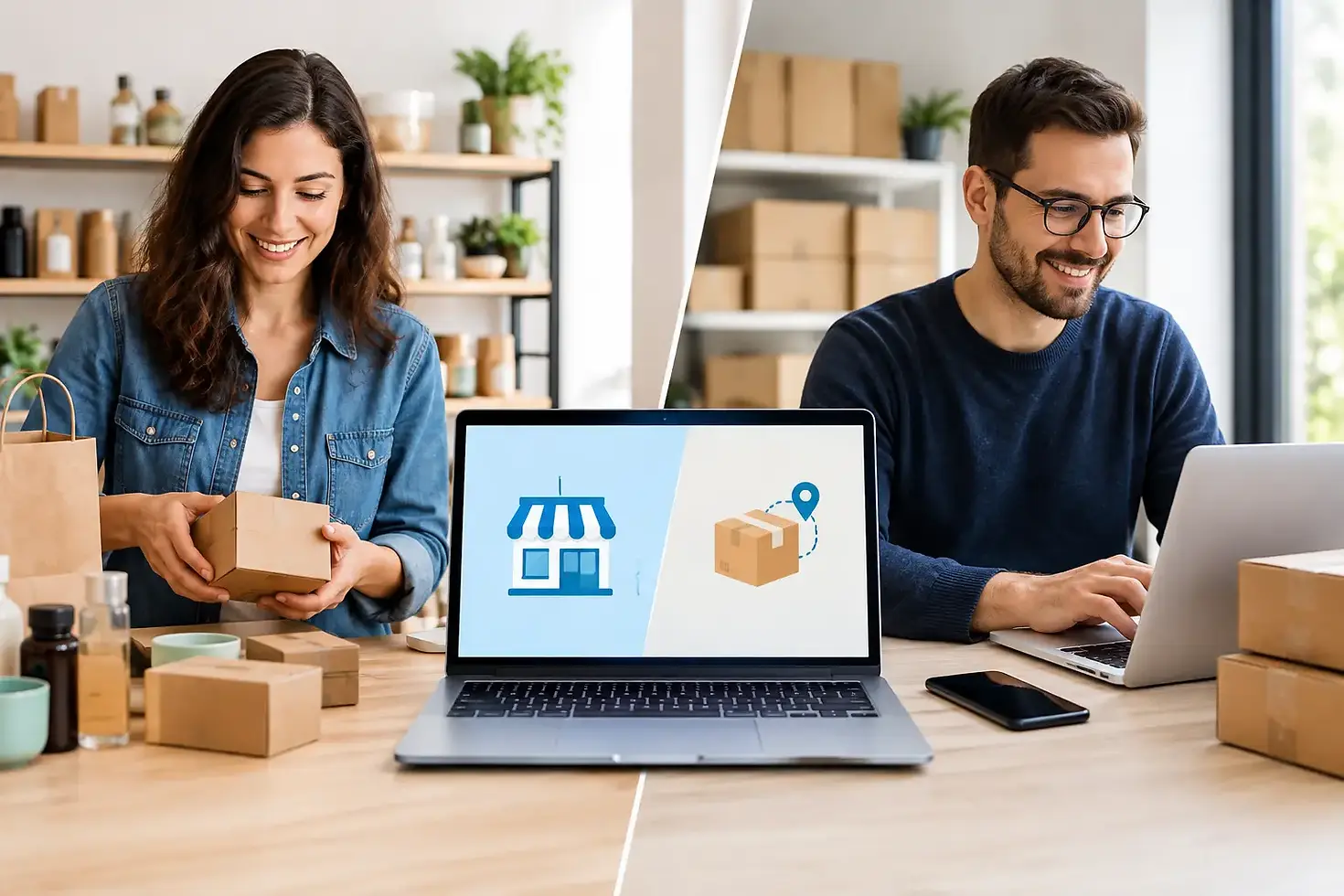
Retail Selling vs Dropshipping for Home Businesses
A home business can look attractive on a screen long before it proves itself in real life. The real test comes when a customer asks a question, an order is delayed, or you need to create income after work with only a few focused hours available. Retail selling vs dropshipping is not simply a choice between two ways of moving products. It is a choice about control, customer relationships, cash flow and the kind of business owner you are prepared to become.
For ambitious people building around a job, family or other commitments, both models can provide a starting point. Neither is a shortcut. The stronger choice is the one that gives you a realistic route to serve customers consistently, build confidence and develop skills that keep paying you back.
What separates the two business models?
Retail selling means buying or accessing products through an established supplier and selling them to customers at a retail price. Depending on the business, you may use a catalogue, personal recommendations, an online shop, social media, events or direct conversations. Your profit is normally the difference between the customer price and your cost, subject to the terms of the supplier programme.
Dropshipping works differently. You market products online, but a third-party supplier stores and sends the goods directly to the customer. You do not usually handle the stock yourself. When a customer places an order through your website, you pass the order to the supplier, who fulfils it.
That lower physical involvement is what makes dropshipping appealing. Yet removing stock from your spare room does not remove responsibility. You still need to attract visitors, convert them into buyers, answer queries, manage complaints and protect your reputation when the supplier makes a mistake.
Retail selling vs dropshipping: control and commitment
The biggest practical difference is control. With retail selling, particularly through a structured distributor programme, you often have clearer product knowledge, defined pricing, training and a recognised system for ordering and customer support. You can speak from experience when you use the everyday products yourself, which makes recommendations more credible than simply repeating a product description from a supplier feed.
With dropshipping, you may have a wider choice of products and suppliers, but that choice can create noise. You must research demand, compare suppliers, build a website, write product pages, test advertising and watch your margins carefully. A product that looks profitable before advertising, payment fees, returns and delivery issues can become far less rewarding once real costs appear.
Stock is not the only cost
Retail selling may require an initial product purchase, samples or a starter package, depending on the provider. That can feel like a barrier, but it can also create accountability. When you have products to demonstrate and a clear customer offer, it is easier to take purposeful action rather than endlessly preparing a website that never launches.
Dropshipping can begin with less investment in inventory, but it is not cost-free. Website subscriptions, apps, branding, product samples, paid traffic, refunds and professional support can all add up. More significantly, it often demands time and digital marketing competence before sales become consistent.
The right question is not, "Which model costs nothing?" No serious business costs nothing. Ask instead: "What am I investing in, what skills will I need, and how quickly can I put those skills into action?"
Customer trust is where businesses are won or lost
Customers buy products, but they remember the experience. In retail selling, the business owner is often visible. You can explain how a product is used, follow up after delivery and make a sensible recommendation based on what the customer actually needs. That personal service turns a one-off purchase into repeat custom.
This matters particularly for household essentials. When someone finds a product they value and a person they trust, they do not need to be persuaded from scratch every month. Consistent service builds a customer base, and a customer base is more valuable than chasing a new sale every day.
Dropshipping can also create loyal customers, but the margin for error is tighter. You are relying on another company for packing quality, stock availability and delivery times. If a parcel arrives late or the item differs from its description, the customer will usually contact you, not the warehouse. You own the relationship even when you do not control fulfilment.
That does not make dropshipping a poor model. It means you need reliable suppliers, realistic delivery information and a clear returns process before spending money on promotion. Many beginners focus heavily on finding a fashionable product and too little on the experience after the checkout.
Income potential depends on repeatable activity
Neither retail selling nor dropshipping guarantees income. Results depend on customer demand, margins, hours invested, business expenses, consistency and the quality of your follow-up. Anyone promising effortless earnings is avoiding the work that creates dependable results.
Retail selling can be well suited to someone who wants to build through conversations, service and repeat orders. A structured opportunity may also offer performance bonuses or the option to develop a team, creating additional income routes for people who are willing to learn leadership, coaching and duplication. Those routes require patience and responsibility. You earn trust before you earn long-term growth.
Dropshipping income is usually more dependent on your ability to create profitable online traffic. Organic content can work, but it takes time. Paid advertising can scale, but it carries risk and requires testing. You may be able to reach customers beyond your immediate network, but competition is intense and platform rules can change without warning.
For many people, the more practical route is to begin with a model that lets them build selling confidence in real conversations, then strengthen their online presence as their skills grow. EzeGet supports that approach through product-based retailing, coaching and a system designed to be worked around existing commitments.
Which model fits your strengths?
Choose retail selling if you want a defined product range, personal support, direct customer relationships and a route that can start with practical conversations rather than advanced technical skills. It is especially suitable if you enjoy helping people make useful choices and are prepared to follow up consistently.
Choose dropshipping if you genuinely want to build and manage an ecommerce operation. You should be willing to learn product research, website conversion, supplier management, customer service and digital advertising. It can suit an independent operator who enjoys testing data and refining systems, but it is not passive simply because someone else posts the parcel.
Your available time also matters. If you have five to ten hours a week, a focused retail routine can be easier to organise: speak to new people, serve current customers, share products responsibly and develop your knowledge. With dropshipping, those hours may disappear into technical tasks before you have even spoken to a buyer.
Build the business you can sustain
Do not choose a model because it sounds easy in a social media clip. Choose one that matches your willingness to learn, serve and stay consistent when the first few weeks are quieter than expected. A business grows when you do the ordinary actions well: know the product, communicate clearly, keep your promises and ask for the next order or referral.
The best starting point is not the trendiest model. It is the one you can work with discipline this week, improve through coaching and keep building until your effort becomes a reputation customers recognise.


Comments